
The internals of the food inflation are worrying, given a broad-based uptick across categories that tend to be sticky, such as proteins, and a narrower-than-expected reduction in inflation for vegetables.

Operational income not covering even their interest expenses, finds study; analysts say if economy turns around, new equity issuances an option


Nifty 50 firms' net profit estimated to grow by a modest 3.1% in Q2, reports Krishna Kant.

'It was because of the huge selloff in the Indian equities that the rupee fell so sharply against the dollar on Friday.'

Firms have to adhere to strict compliance requirements mandated by global parents

The benchmark Sensex companies' underlying earnings per share are down 3 per cent (on a cumulative basis) since January 2015, against 25 per cent rise in the index value during the period

Government-owned companies are more generous in rewarding their shareholders with dividends.

The sector is witnessing weak tendering.

This is largely on the back of Tata Steel's expansion at Kalinganagar, as well as JLR's in China and Brazil

Indian market has been plagued by negative sentiment and triggers

An analysis of year-wise movements of average global crude oil prices versus India's GDP reveals no inverse correlation, contrary to wide belief.

According to Rahul Rege, business head (retail) at Emkay Global Financial Services, it is difficult to track more than 10 stocks.

As inflation rate is near the upper limit of the comfort zone, experts rule out rate cuts anytime soon

Analysts worry about possible loan waiver.

Experts expect the trend to continue in the near term.

There, however, has been an improvement in operating margins.

Indian Hotels, Tata Steel, Tata Teleservices, Tata Motors, Tata Power need some immediate attention of the Tata Group chairman

Analysts refuse to read too much into the early birds numbers.

Previous peak in 2010 crossed in first five-and-a-half months this year.

For equity investors, the risk-to-reward ratio is worsening.

In the past 12 months, such earnings have grown in double digits in Europe, the US, Japan and South Korea.

The index is more expensive than it was at 2014-end or when it hit a life-time high in January.

Equity benchmark Sensex tumbled 674 points on Friday, weighed by losses in banking stocks as an unabated spike in new coronavirus cases fuelled uncertainty over the economic impact of the pandemic. After hitting a low of 27,500.79 during the day, the 30-share BSE barometer ended 674.36 points or 2.39 per cent lower at 27,590.95. The NSE Nifty shed 170 points, or 2.06 per cent, to finish at 8,083.80.

Analysts say there is still no visibility of earnings improvement.

The growth premium India enjoyed has largely been lost.

Fresh investments by corporates up just 5.8% in FY17, lowest since 1992

TCS kicked-off the Q1FY17 earnings season for information technology companies on Thursday.

The Sensex and the Nifty witnessed biggest one day loss in percentage terms since June 24

With cash -- the primary medium of exchange -- all but disappearing, it is now unlikely that the expected fillip to demand on account of a good monsoon and proceeds from the Seventh Pay Commission payout will materialise.

That resulted in a 50-basis point improvement in operating profit margins on a sequential basis.

While Raghuram Rajan has said in the past that other factors, including domestic fundamentals, outweigh the US Fed policy meet, this time it would be different

Indian CEOs might like to make some serious course correction.

The bulk of of trading on stock markets is done algorithmically, by computerised clerks working at the behest of human traders.

In the domestic market, the Tata Group has lost ground in the passenger car business.

The number of infrastructure projects cleared by a monitoring group set up in the Cabinet Secretariat had increased consistently in the past year.

The finance ministry is not only keen to split the roles of CMD, but also wants to appoint them for a fixed tenure of five years.

The gap between Nifty's price-earnings multiple and economic growth is at a 12-year high
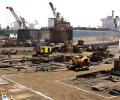
Adani Enterprises plans to invest a total of $25 billion in the next five years.

With commodity markets remaining soft and uncertain, it is likely the money will flow into equity markets with strong upsides, such as India.
 © 2026 Rediff.com - Advertise with us - Disclaimer - Privacy Policy - Sitemap - Feedback - About us - Terms of use - Grievances